





Glulam Beams – Engineered Laminated Timber
Glulam (glued laminated timber) is an engineered structural material created by bonding layers of timber to form strong, stable beams capable of spanning large distances. At Crendon Timber Engineering, we design and manufacture bespoke Glulam solutions that provide a high-performance alternative to steel and concrete.

Why Choose Crendon Timber Engineering Glulam?
With nearly 60 years of experience, Crendon delivers precision-engineered timber solutions for residential, commercial and public sector projects, providing a complete service from concept to delivery.
We work closely with architects, engineers and contractors to develop tailored solutions for everything from simple beams to complex structural solutions.
Our service includes:
- Structural design consultation
- Bespoke beam sizing and specification
- Full structural calculations
- CAD and fabrication drawings
- Manufacture of custom glulam components
- Nationwide supply and delivery
What is a Glulam Beam?
Glulam (glued laminated timber) is an engineered timber product made by bonding multiple layers of timber together with durable structural adhesives.
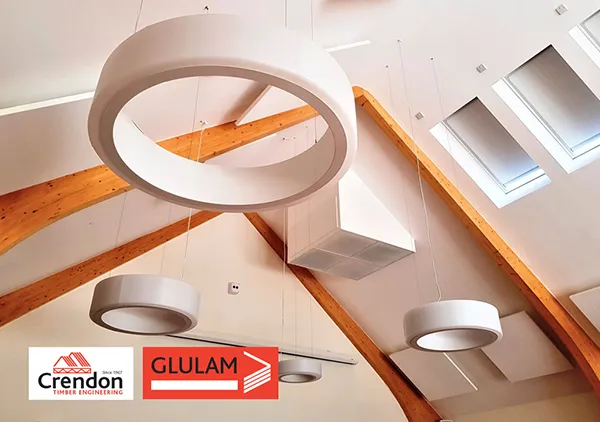
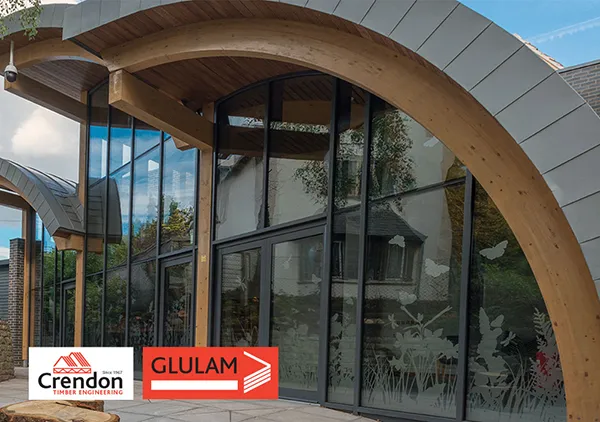
This manufacturing process creates a stable structural element that is strong and dimensionally stable, capable of achieving long spans and complex shapes while maintaining a natural timber appearance.
Glulam applications
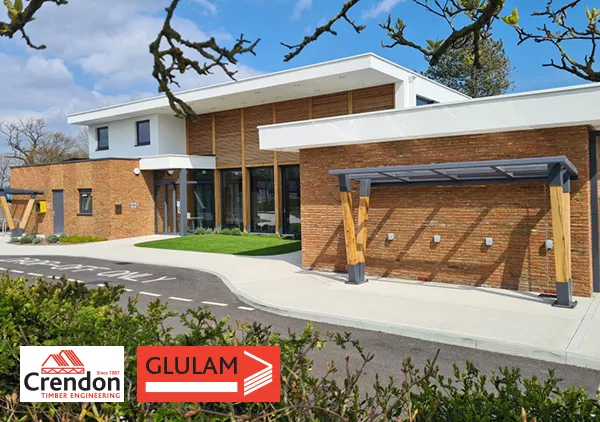
Glulam is used across a wide range of residential, commercial and public sector projects, including school & educational facilities, leisure buildings and agricultural buildings, providing a strong, versatile and visually appealing structural solution. Its ability to achieve long spans and complex shapes makes it suitable for both standard structural applications and architect-led designs where performance and aesthetics are equally important.
Complete structural packages
Glulam can be seamlessly integrated into a complete structural timber package, including:
- Roof Trusses
- Feature Trusses
- Posi-Joist metal web joists
- Gable Panels
- Spandrel Panels
- Roof and Floor Cassettes
Crendon coordinates design, manufacture and delivery across all elements to ensure compatibility, efficiency and smooth on-site installation. Our Supply & Fit service further simplifies delivery, providing a fully managed solution from design through to completion.
Get a free quote: contact us on sales.crendon@crendon.co.uk
What are the Benefits of using Glulam?
Glulam offers a range of structural, commercial and environmental benefits, helping to improve build efficiency, reduce material weight and deliver high-performance results across a variety of applications. As a timber engineered alternative to traditional materials such as steel and concrete, it provides a reliable, flexible and sustainable solution for modern construction.
- Inherent load bearing strength.
- Ability to design large wooden spans to create open spaces.
- An eco-friendly alternative to concrete and steel.
- Durable, light and easy to handle.
- Requires no boxing in or cladding.
- Glulam can be pre-cambered to counteract the effects of deflection in long spans.
- Competitive price makes it a clear choice for all types of construction.
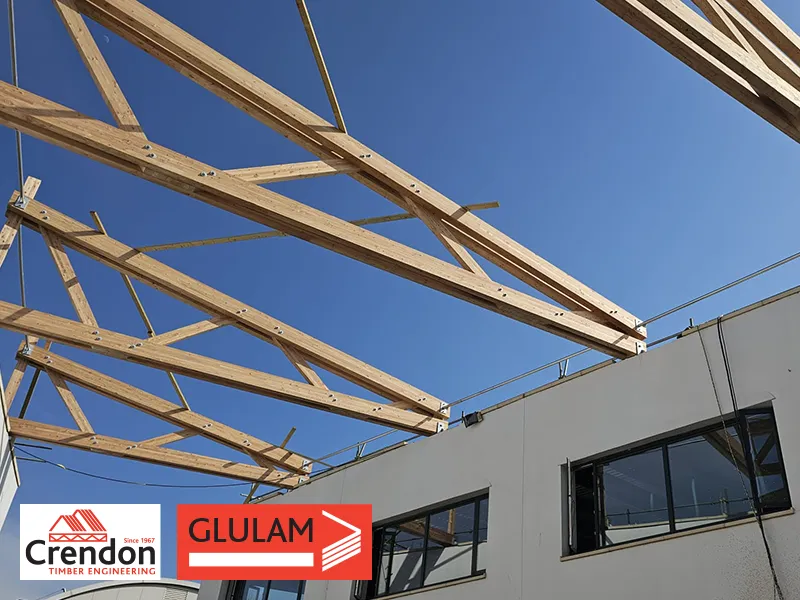
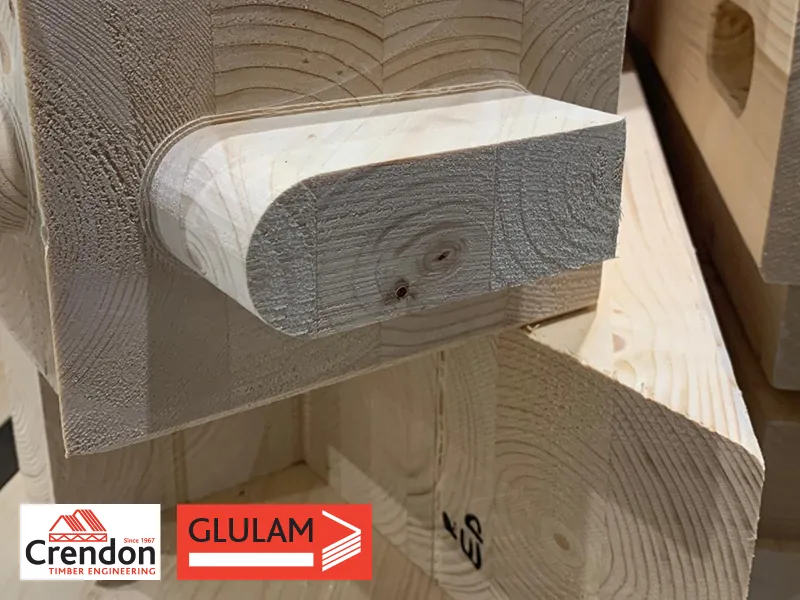
Glulam gallery
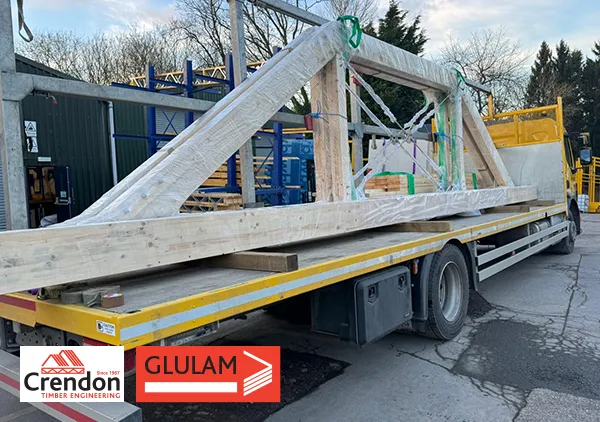
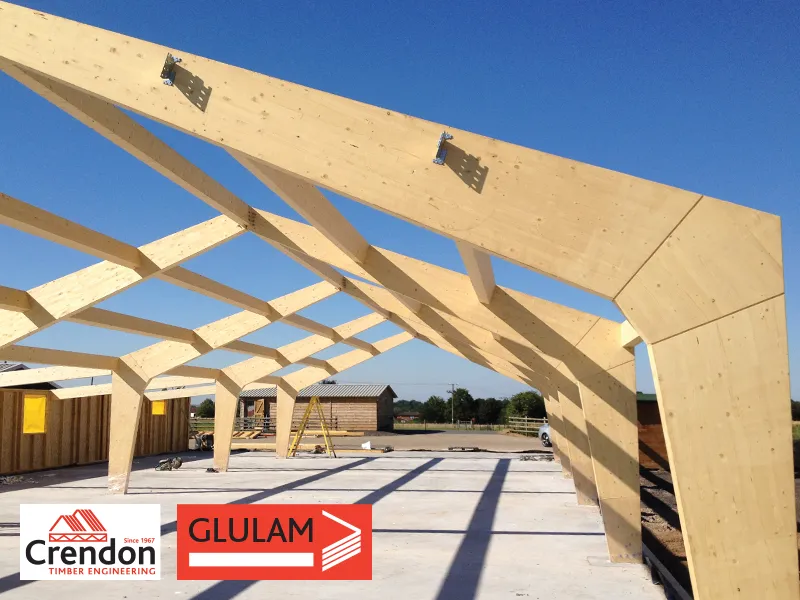
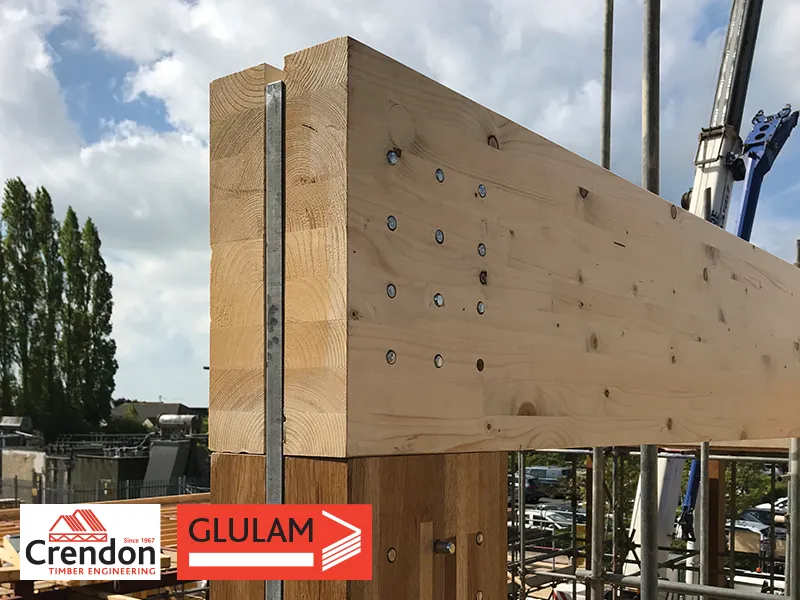
Explore a selection of Glulam projects delivered by Crendon Timber Engineering, showcasing the versatility, strength and architectural quality of engineered timber. From large-span structural beams to bespoke feature elements, our gallery highlights how Glulam can be used across a wide range of residential, commercial and public sector applications.
Glulam FAQs
Find answers to common questions about Glulam design, performance, and installation.
What is Glulam?
Glulam (glued laminated timber) is an engineered timber product made by bonding layers of timber together to form strong structural beams.
How strong is Glulam compared to steel or concrete?
Glulam offers excellent load-bearing performance and can achieve large spans, making it a viable alternative in many structural applications.
Can Glulam be used as an exposed feature?
Yes, Glulam is often used as an exposed structural element and does not require boxing-in or cladding.
Is Glulam suitable for large-span buildings?
Yes, Glulam is ideal for creating large, open spaces in residential, commercial and industrial buildings.
Can Glulam beams be customised?
Yes, all Glulam elements are bespoke designed, including straight, curved and tapered configurations.
Is Glulam sustainable?
Yes, Glulam is made from renewable timber and has a lower carbon footprint compared to traditional structural materials.
How long does it take to install Glulam beams?
Installation times vary depending on project size, but prefabrication ensures a faster and more efficient process compared to traditional construction methods.
Can Glulam be used with timber frame or steel structures?
Yes, Glulam can be integrated with timber frame, steel and hybrid structural systems.
How far can a glulam beam span?
The span of a Glulam beam depends on factors such as beam size, load requirements and structural design. Glulam can achieve long spans compared to traditional solid timber, making it suitable for open-plan spaces and large structural applications. Each beam is engineered to suit the specific project, with design calculations provided to ensure performance and compliance.
How much does a glulam beam cost?
The cost of a Glulam beam will vary depending on size, span, specification and design complexity. Bespoke shapes, larger spans or exposed architectural finishes may increase overall cost. While Glulam can have a higher upfront cost than standard timber, it can deliver value through reduced installation time, improved performance and enhanced aesthetics. For an accurate quotation, please contact our team.
Does glulam need fire protection?
Glulam can be designed to meet fire performance requirements without additional protection in many applications. It performs predictably in fire conditions by forming a protective char layer, which helps maintain structural integrity for a defined period. Where required, additional fire protection measures can be specified to meet project and regulatory requirements.
Can glulam be used outdoors?
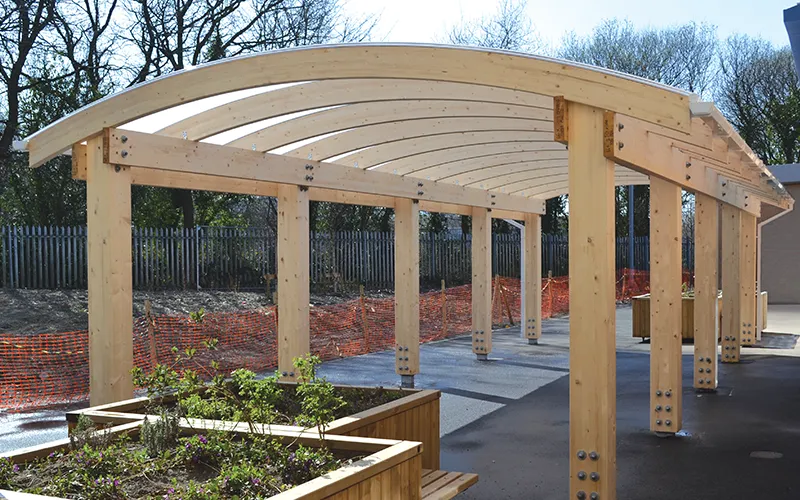
Yes, Glulam can be used in external applications when correctly specified and protected. This may include the use of appropriate treatments, coatings or design detailing to prevent moisture ingress and weathering. It is commonly used in canopies, walkways and external structures.
What’s the difference between glulam and LVL?
Glulam is made by bonding layers of timber together in a way that allows for flexibility in shape and size, including curved or bespoke forms. LVL (Laminated Veneer Lumber) is manufactured from thin layers of wood veneer and is typically used for straight, uniform structural elements. Glulam is often preferred where architectural appearance and longer spans are required, while LVL is commonly used in more standardised structural applications.
What’s the difference between glulam and CLT?
Glulam is primarily used for beams and columns, providing linear structural support. CLT (Cross-Laminated Timber) is a panel-based product used for walls, floors and roofs. While both are engineered timber products, they serve different structural roles within a building and are often used together as part of a complete timber solution.
Speak to Our Team
Discuss how Crendon Timber Engineering can support your next project.
General Enquiry
"*" indicates required fields